Loading...
Tubesettler Lamella
As Arbiol, we are a company specialized in the production of lamella clarification systems and water treatment equipment.
We provide high-efficiency and long-lasting solutions to all our domestic and international customers, manufactured to European Union standards with certified contact compliance for drinking water.
All our products are manufactured in accordance with European Union standards. They hold all necessary certifications for materials in contact with drinking water.


CLICK HERE TO SEE CURRENT TUBE SETTLER LAMELLA PRICES AND BUY ONLINE
Visit our marketplace at aritim.net, or Request a Discounted Price Quotation


Lamella Application Types
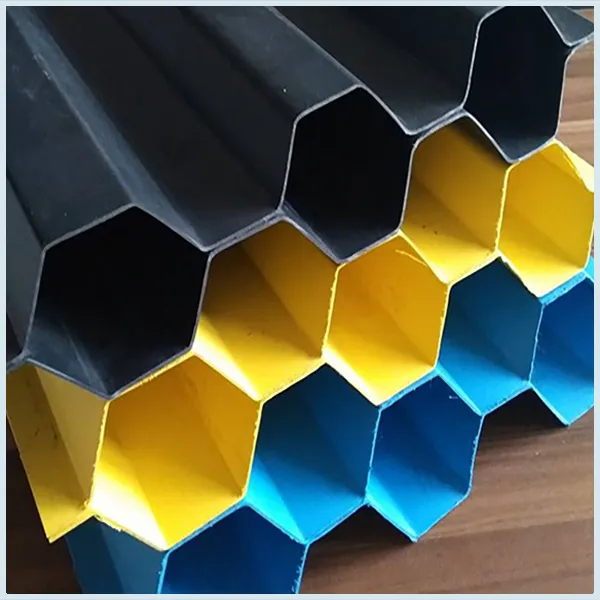
Lamellas used in industrial water treatment systems are manufactured in four main categories based on their structural characteristics:1 - Sheet Type Lamella
**Structural Feature:** Consists of a single-piece lamella sheet with a trapezoidal cross-section.**Production Flexibility:**
Custom manufacturing based on project requirements.
Production capacity in desired widths (500-1120 mm) and lengths (600-3000 mm).
Standard thickness: 1.0-1.5 mm.
**Material Options:**
PVC and PP (Polypropylene).
UV-stabilized, smooth surface, hygienic, anti-bacterial, and certified for drinking water applications.
The most significant advantages of sheet type lamella are its cost-effectiveness and ease of transportation. However, the requirement for specialized machinery for manufacturing and the difficulty of on-site assembly are its primary disadvantages.
Sheet Type Lamella Price
2 - Unit Type Lamella
**Assembly Structure:** Consists of two symmetrical (Sheet Type) lamella sheets joined by ultrasonic welding.The advantages of unit type lamella include being more economical, not requiring a frame for small tanks, and allowing customers to build their own frames if needed.
Unit Type Lamella Price
3 - Block Type Lamella
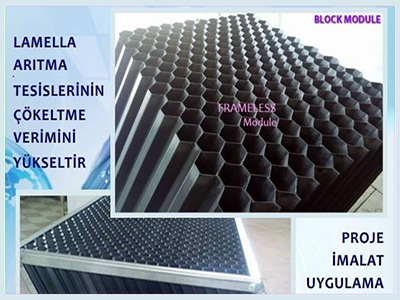
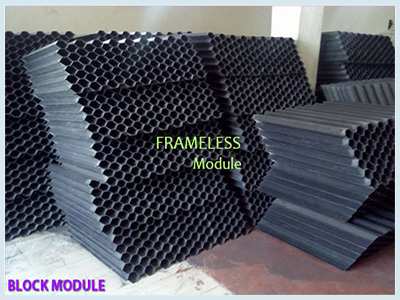
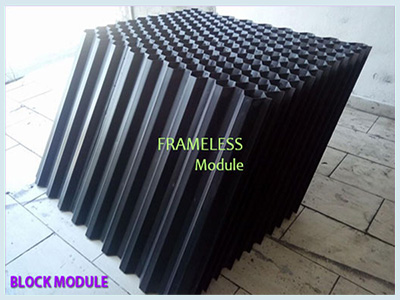
Modular structure obtained by progressively adding 4 to 20 lamella sheets.No frame is required. They are arranged directly inside the basin/tank side-by-side and back-to-back.
The most significant advantage of block type lamella is its cost-effectiveness.
Block Type Lamella Price
4 - Frame Type Lamella
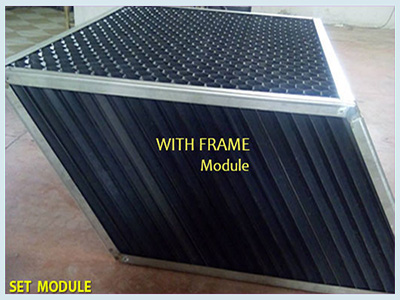
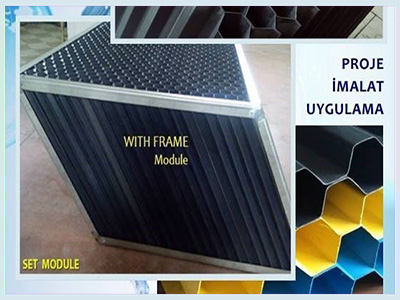
**Structure:** Consists of a protective outer cage containing Unit type lamellas.Can be manufactured in any desired dimensions suitable for every project.
The frame is made of Grade 304 stainless steel.
The advantages of frame type lamella are its durability, ease of maintenance and service, and the value it adds to the project with its aesthetic appearance.
Frame Type Lamella Price
The Importance of Water Treatment with Lamella Systems
Water is the primary source of life, and access to clean water is critical for a sustainable future. Today, many technologies have been developed for wastewater treatment and clean water production. One of these is lamella systems. With variations such as clarifier lamella and purifier lamella, these systems are widely used in both industrial and municipal treatment plants.What is Lamella?
A lamella is a sedimentation system consisting of inclined plates. These plates allow suspended solids (sediment, sludge, particles) in the water to settle faster and more efficiently. Lamella systems for wastewater treatment offer a significant advantage, especially in the treatment of high-flow wastewater. By providing high efficiency in a confined area, they occupy much less space compared to conventional sedimentation tanks. Lamella systems for clean water treatment are frequently used in drinking water treatment plants. Particles causing turbidity in water settle between the lamella plates, helping to clarify the water. These systems, also called clarifier lamellas, provide pre-treatment before the water moves to the filtration stage. One of the greatest advantages of lamella systems is energy efficiency and low operating costs. Furthermore, thanks to their modular structure, they can be easily adapted to treatment needs of different capacities. In conclusion, lamella technology is an indispensable solution for the protection of water resources and sustainable water management. Increasing the use of these systems against growing water pollution problems will enhance access to clean water and contribute to the preservation of environmental balance. Lamella Technology: Efficiency and Sustainability in Water Treatment Today, increasing population, industrialization, and climate change put significant pressure on clean water resources. Therefore, water treatment technologies are gaining importance every day. Lamella systems stand out as a technology that provides high efficiency, space savings, and economic solutions in water and wastewater treatment.The Importance of Water Treatment with Lamella Systems
Water is the primary source of life, and access to clean water is critical for a sustainable future. Today, many technologies have been developed for wastewater treatment and clean water production. One of these is lamella systems. With variations such as clarifier lamella and purifier lamella, these systems are widely used in both industrial and municipal treatment plants.What is Lamella and How Does It Work?
A lamella is a sedimentation system consisting of inclined plates placed parallel to each other. In this system, as water passes slowly between the plates, suspended solids (sediment, sludge, colloidal particles) settle due to the effect of gravity. Thanks to the inclined design of the plates, settled solids collect at the bottom, and the clarified water exits from the top. These systems, also known as clarifier lamellas, provide fast and effective sedimentation, especially in high-flow waters. They occupy much less space and offer higher efficiency compared to traditional settling basins.Application Areas of Lamella Systems
Lamella for Wastewater Treatment In the treatment of industrial and domestic wastewater, lamella systems are used especially during the physical treatment stage. They are effective in the pre-treatment of wastewater containing high solids. They are widely preferred for treating wastewater in the chemical, food, textile, and mining sectors. Lamella for Clean Water Treatment In drinking water treatment plants, purifier lamella systems are used to remove turbidity from raw water. Clarification is achieved by settling suspended solids from river, lake, and dam waters. This reduces the load on the filtration and disinfection stages. Stormwater Treatment Lamella systems are used to remove pollutants carried by rainwater, especially in urban areas. Environmental pollution is prevented by settling sediment, oil, and other pollutants in surface runoff. Advantages of Lamella Systems High Efficiency: The plate structure increases the settling rate, allowing more water to be treated in less time. Space Saving: It requires much less area than traditional sedimentation tanks, which is a major advantage, especially for urban treatment plants. Low Operating Cost: Energy consumption is low, and maintenance requirements are minimal. Modular Design: It can be expanded to accommodate capacity increases and easily adapted to different flow rates.Conclusion
Lamella technology is an eco-friendly and economical system offering modern solutions in water and wastewater treatment. With various applications such as clarifier and purifier lamellas, it has a wide range of use from industry to municipalities. Promoting this technology for the protection of water resources and sustainable water management is of great importance for providing clean and reliable water to future generations. With the increasing global population and intensifying water stress, the importance of efficient treatment systems like lamella will continue to grow. Therefore, adopting lamella technology more widely in the development of water treatment infrastructures will be a rational choice from both environmental and economic perspectives.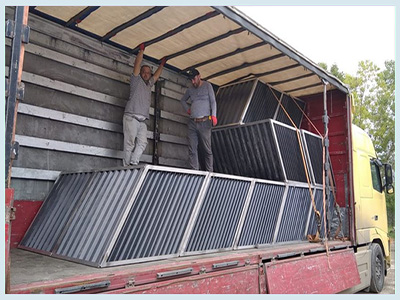
© F12 SYSTEMS .